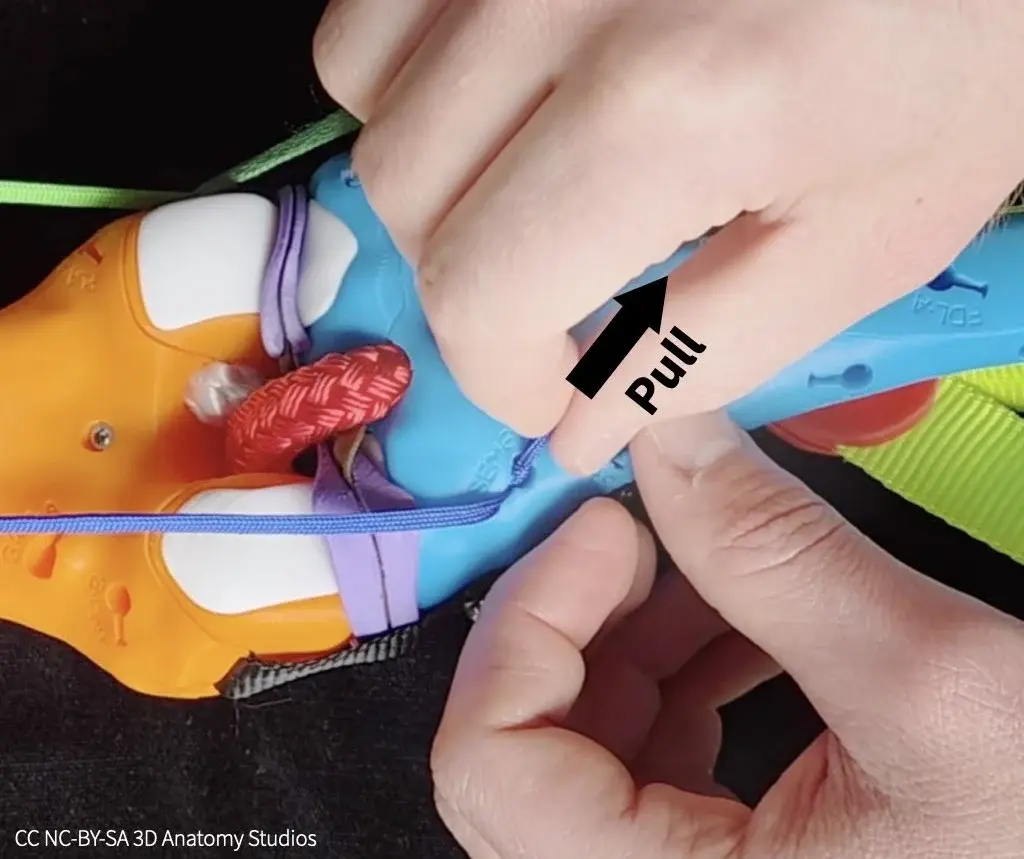
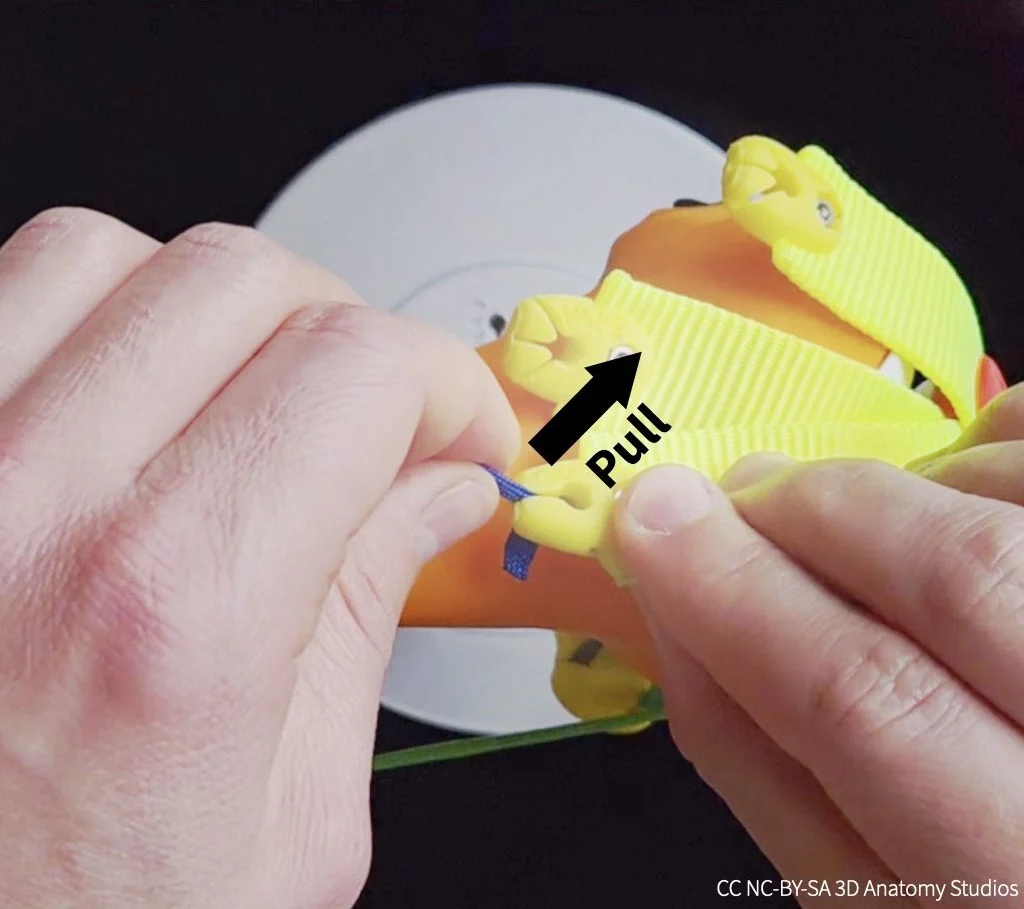
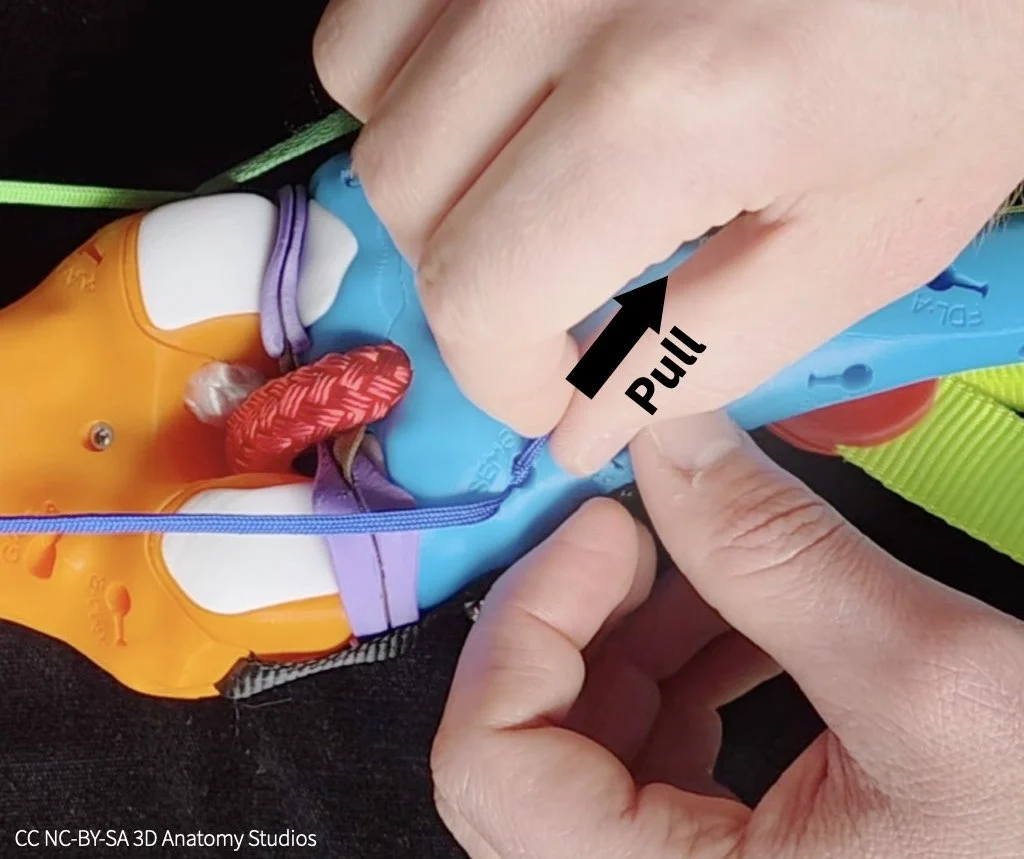
Attaching manual muscle cords
If you have a basic or full knee kit model, your kit comes with "manual muscle cords." These cords act like puppet strings, enabling you to simulate a shortening muscle by attaching the cord to a muscle attachment site and pulling on it. These cords are nonelastic (i.e., not stretchy) and thicker than the elastic muscle cords but they can attach to any of the sites where you can attach the elastic muscle cords. The manual muscle cords work best if you operate them through the cross-section plates; for muscles that don't cross through the cross-section plate (e.g., popliteus), you can just attach one end directly to the muscle's origin or insertion.
Video showing how to simulate muscle contraction using a manual muscle cord.
You'll find the manual muscle cords along the top of Parts Plate A. They come in four different colors so that you can more easily tell them apart if you have all four attached. To attach a cord to a bone, you'll also need the forceps, located at the bottom left corner of Parts Plate A.
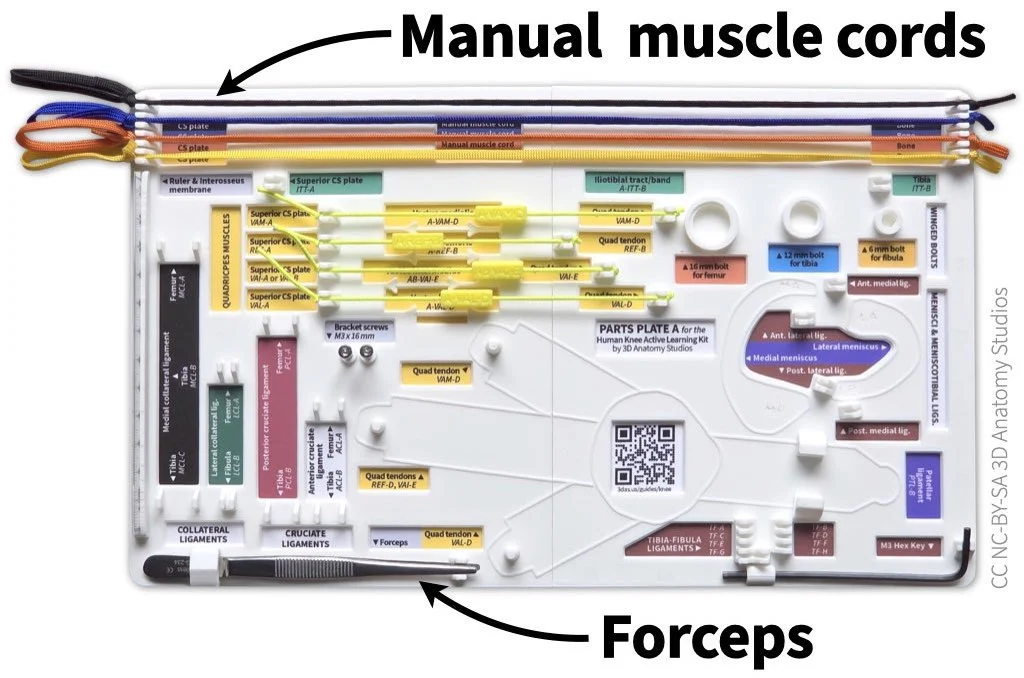
The manual muscle cords and forceps should be attached to Parts Plate A in your kit. The manual muscle cords attach to hooks at the top of the plate and the forceps fit into a holder in the bottom left corner.
Whenever you're attaching a muscle to your knee kit, be sure that the two attachment sites have the same 3-letter muscle code, indicating they belong to the same muscle. If you're unfamiliar with the muscle abbreviation system used in your knee kit, you can review that here. Of course, you can also intentionally attach a muscle to two sites with different muscle codes to simulate a muscle that does not exist.
Attaching a manual muscle cord to a clip
To attach a manual muscle cord to one of the quadriceps tendon clips (i.e., simulating one of the quadriceps muscles), follow the steps shown in the video or listed out below.
Video showing how to attach a manual muscle cord through the cross-section plate to one of the quadriceps tendons. In this video, the manual muscle cord represents the rectus femoris muscle.
- Thread a manual muscle cord (the end with a simple knot, not the looped end) through one of the quadriceps attachment holes/sites in the superior cross-section plate (i.e., REF, VAI, VAL, or VAM).
Photo of superior cross-section plate, inferior view. With arrows indicating holes for quads?
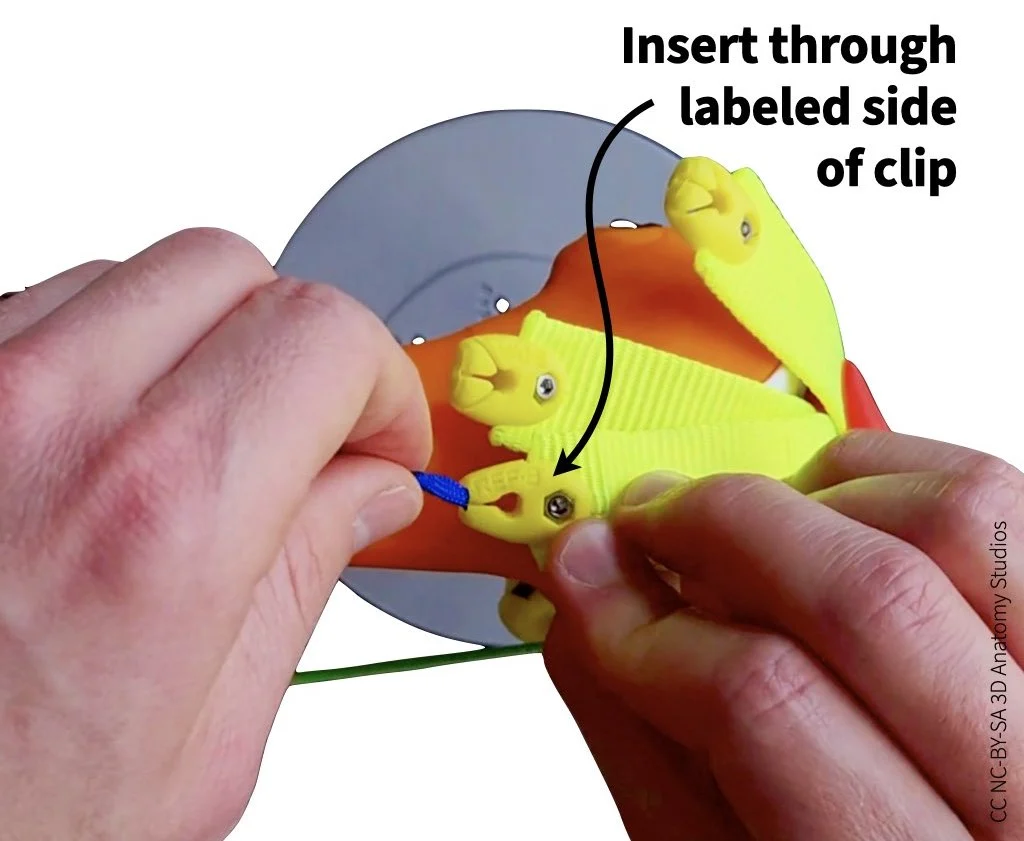
- Continue pulling the cord through the cross-section plate until it reaches whichever quadriceps tendon clip you want to attach it too (i.e., REF-B, VAI-E, VAL-D, or VAM-D). Insert the end of the cord through the hole in the clip, ensuring that you insert the cord through the labeled side (i.e., you should see the label as you're inserting the cord).
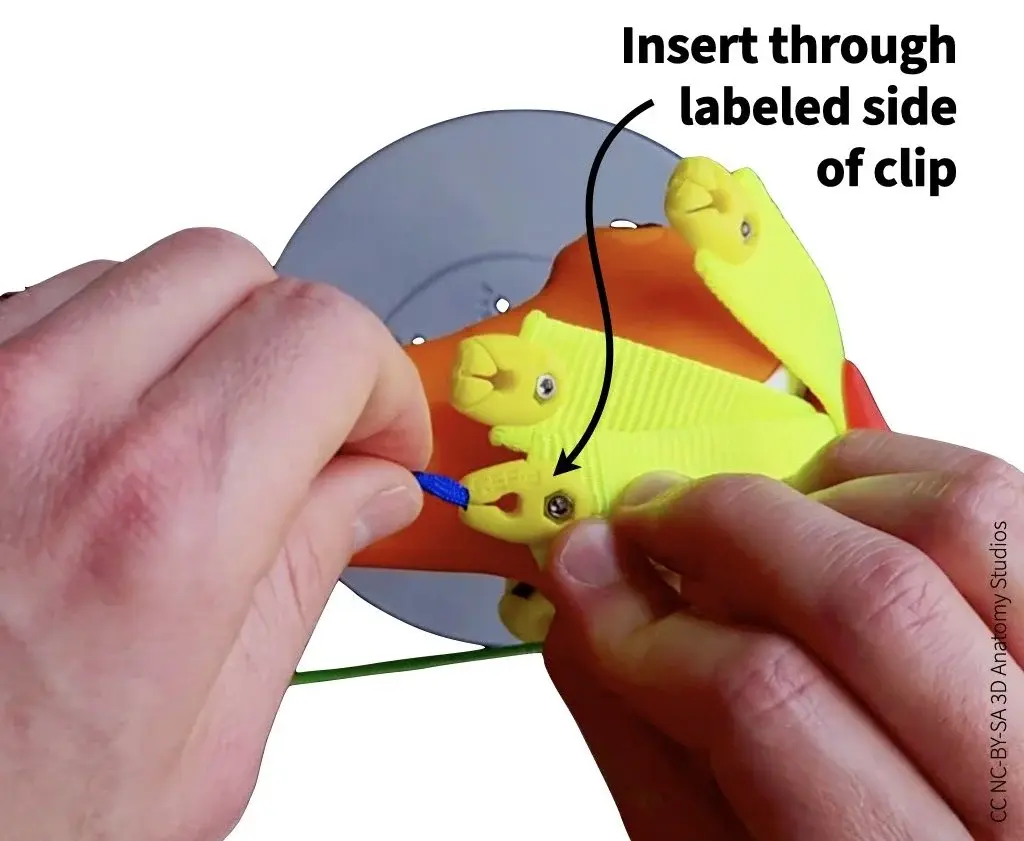
- To secure cord in the clip, guide the cord into the slot of the clip and pull until the knot locks into place.

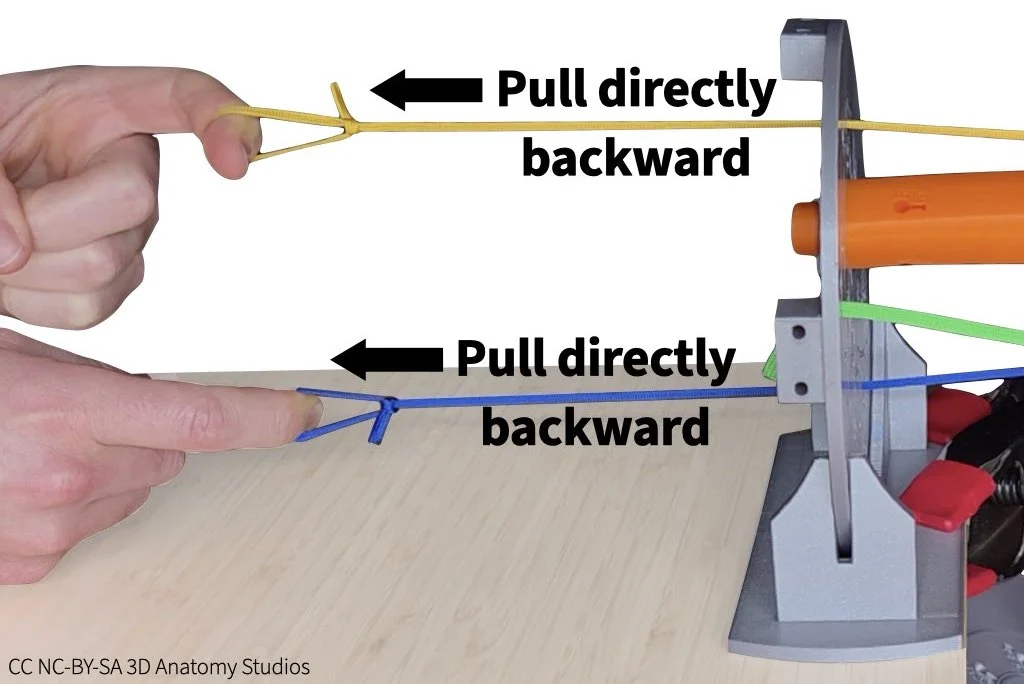
Whenever you're pulling manual muscle cords through the cross-section plate, pull directly backward (not upward). If you pull upward, the cord will pull up on the cross-section plate, possibly lifting it out of the bracket (see image below).
Attaching a manual muscle cord to a bone
To attach a manual muscle cord to a bone, follow the steps shown in the video or listed out below.
Video showing how to attach a manual muscle cord through the cross-section plate to a muscle attachment site on a bone. In this video, the manual muscle cord represents the semimembranosus muscle.
- Thread a manual muscle cord (the end with a simple knot, not the looped end) through an attachment hole/site in one of the cross-section plates for the muscle that you want to simulate.
Photo of superior and inferior cross-section plates, with letter labels visible?
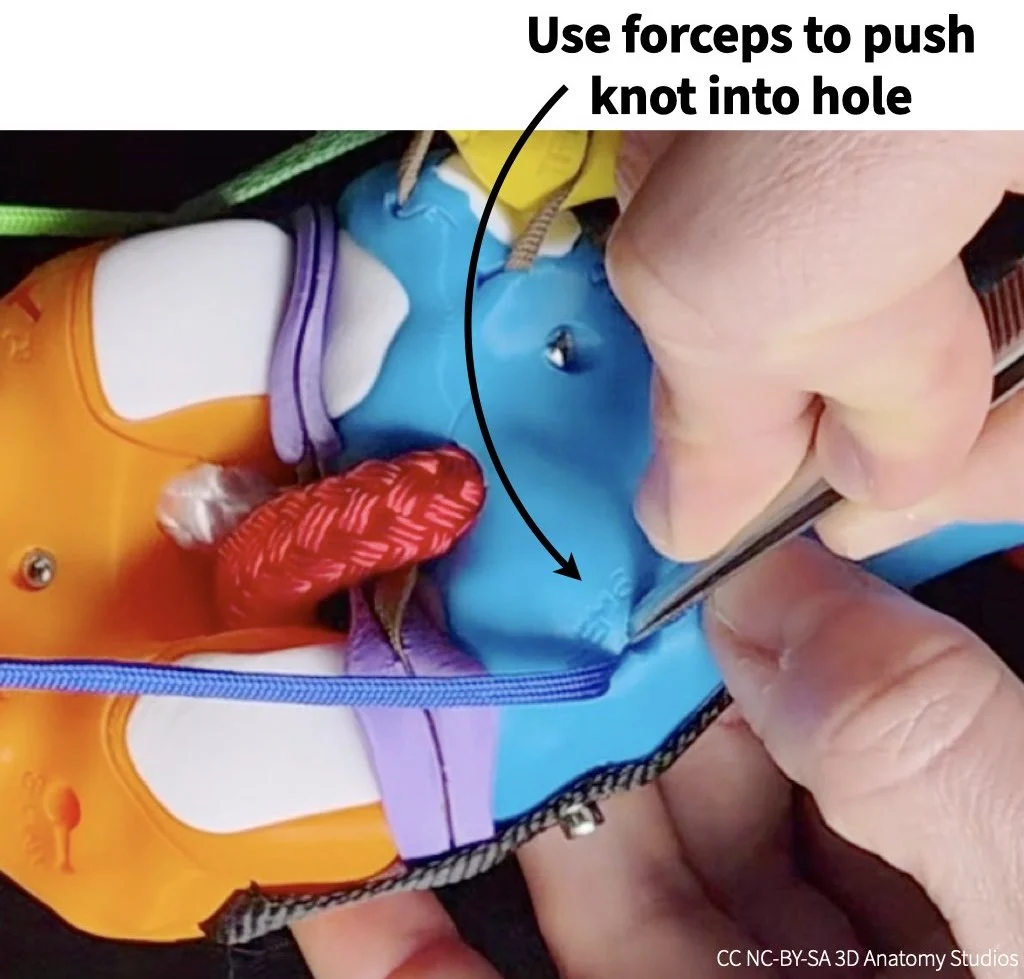
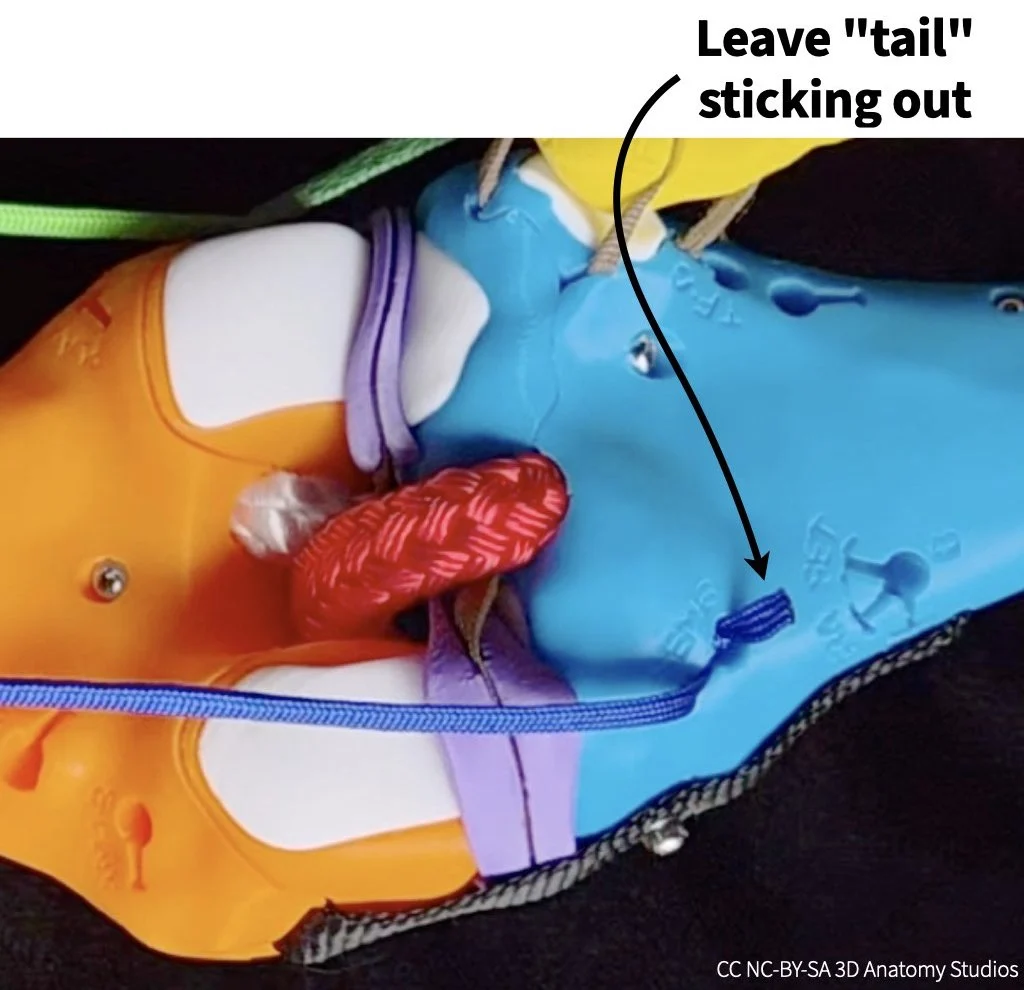
- Continue pulling the cord through until it reaches the attachment hole/site where you want to attach the muscle. Use forceps to push the knot into the attachment hole. The knot should be pushed fully below the surface of the bone, into the hole.
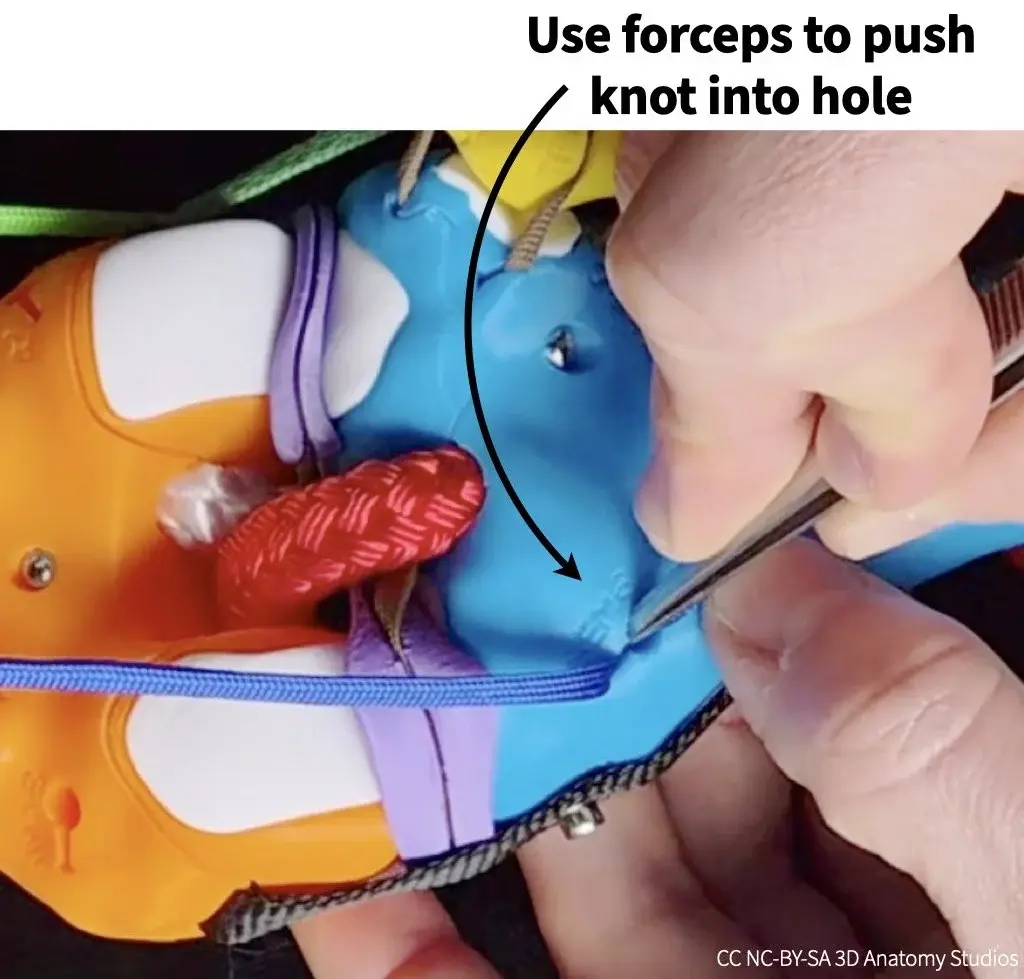
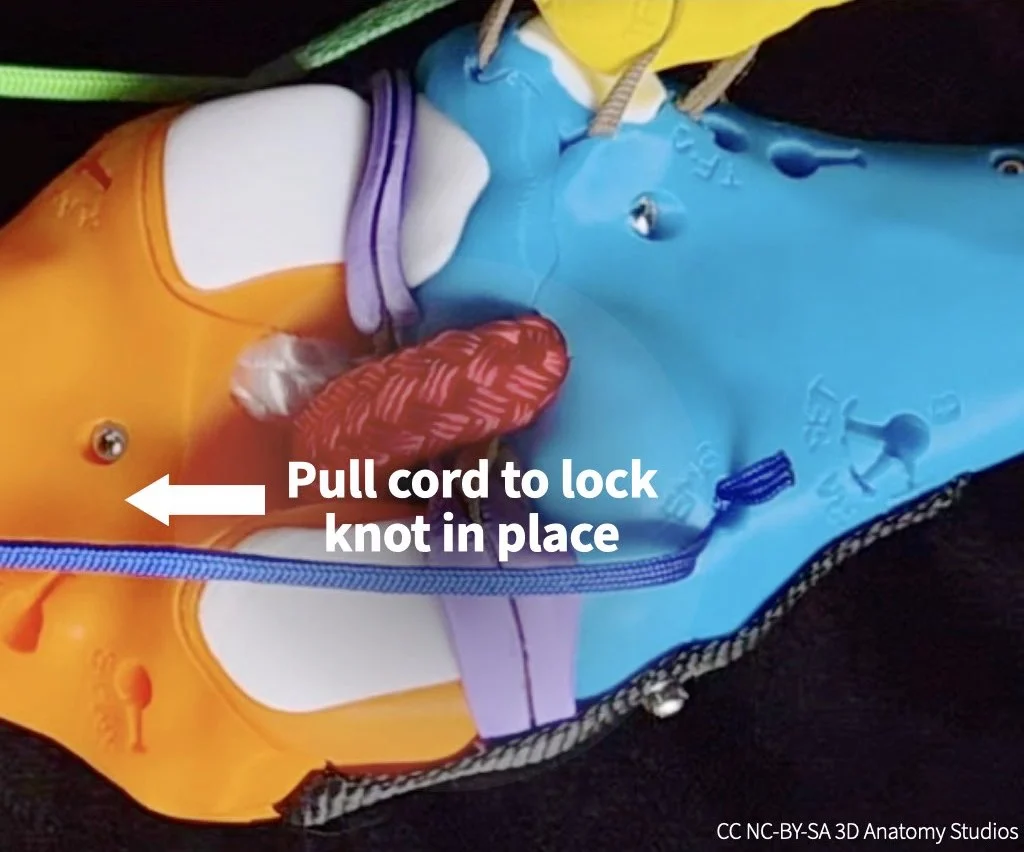
- Pull the cord into the hole slot until the knot is caught by the hook inside the hole and the cord is secured (you might feel the knot "click" into place). If the knot pulls out of the hole when you do this, you might need to hold the knot inside the hole with the forceps while pulling on the cord to keep it in place.
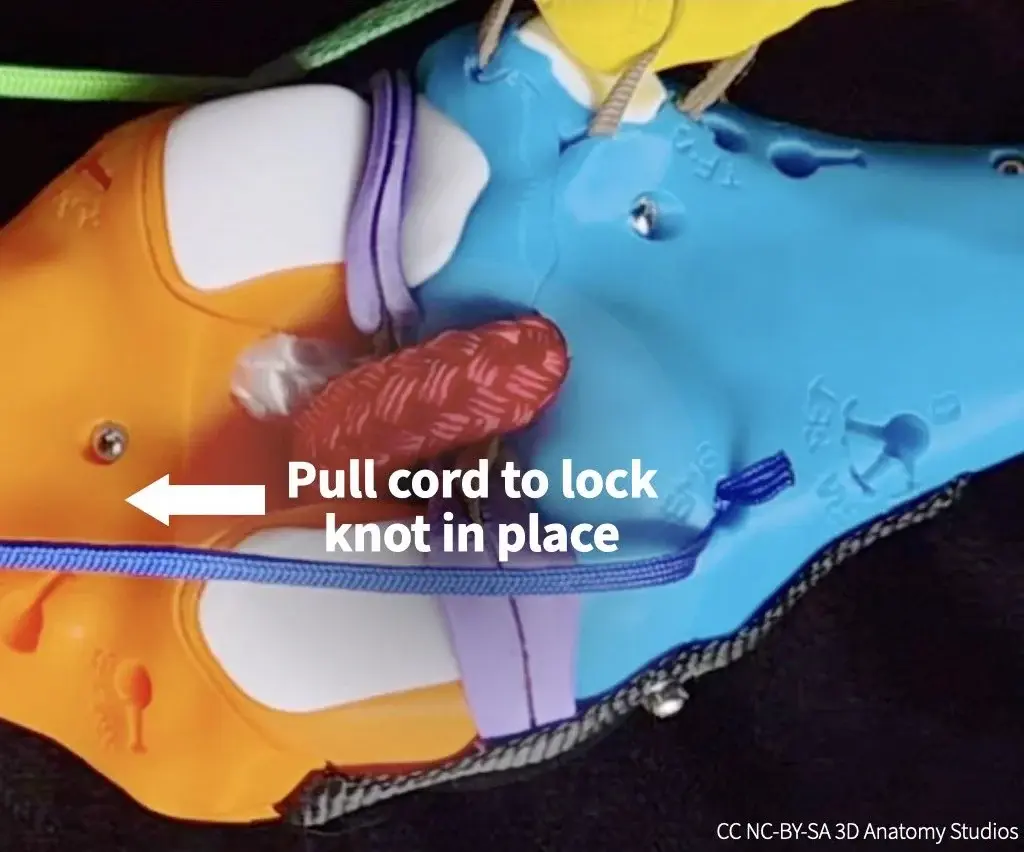
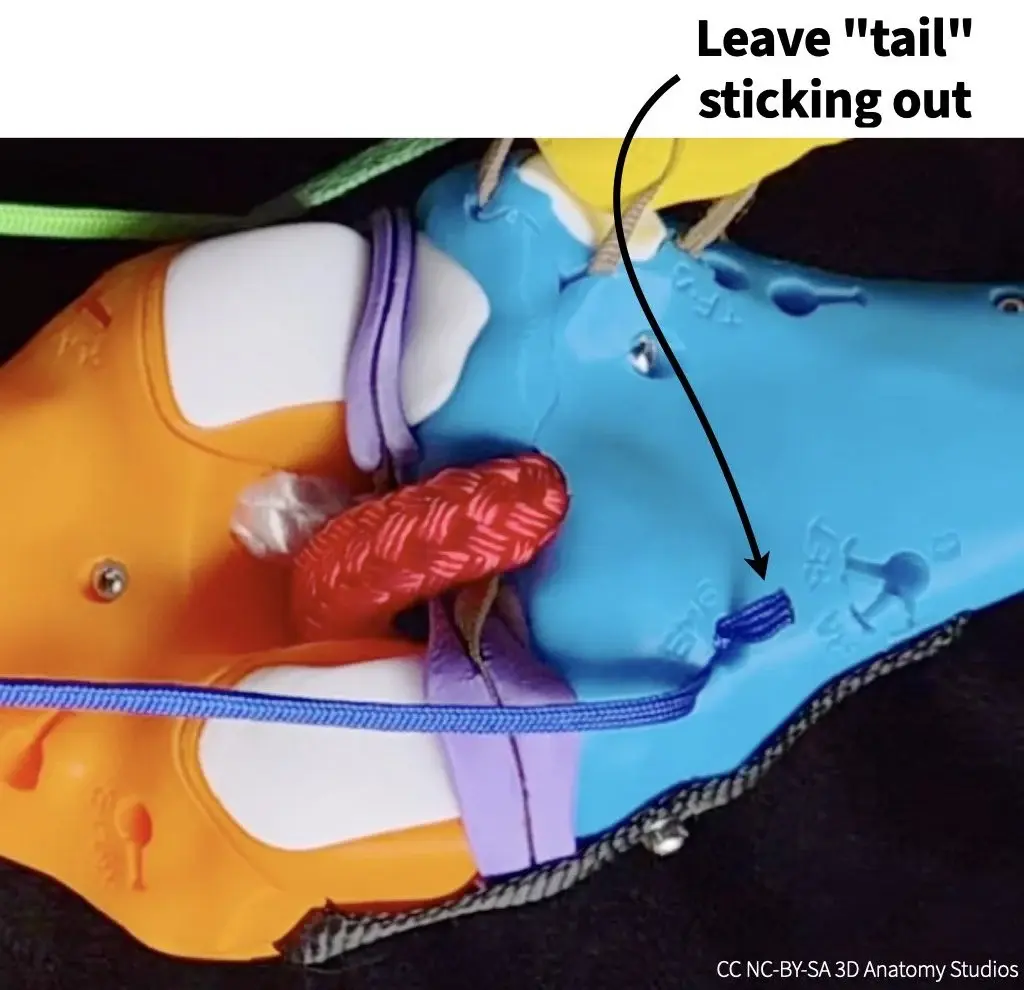
- To make it easier to detach the cord later, leave the cord's "tail" (the bit of cord after the knot) sticking out of the hole.
Simulating muscle contraction
Now that you have both manual muscle cords attached, simulate co-contraction of the rectus femoris and semimembranosus to rotate the knee through flexion and extension as shown in the video below.
Video showing how to simulate co-contraction of two muscles using the manual muscle cords. In this video, the yellow (upper) muscle cord represents the rectus femoris and the blue (lower) muscle cord represents the semimembranosus.
Based on your simulation, why do you think at least two muscles are needed to drive smooth, controlled motion? And why is muscle coordination (regulating the timing and force of muscles relative to other muscles) important when co-contracting multiple muscles (i.e., why can't you just contract all muscles with equal tension at the same time)? Write your answers on page 1 of the activity worksheet; check the hint below if you need some help.
HINT
In considering the importance of muscle coordination, pay attention to the relative timing and force you're using with your hands as you pull the two muscle cords to simulate flexion and extension.
Detaching a manual muscle cord
For the next simulation, you'll need to detach the rectus femoris and semimembranosus from your knee. To detach the muscle cords, follow the steps shown in the video or listed out below.
Video showing how to detach manual muscles cords from a quadriceps tendon clip (first half) and from a bone surface attachment site (second half).
To detach the rectus femoris from its attachment to its tendon, first pull the cord up and out of the clip slot. The knot will then be unlocked from the clip so you can detach the cord from the clip and pull it out through the cross-section plate.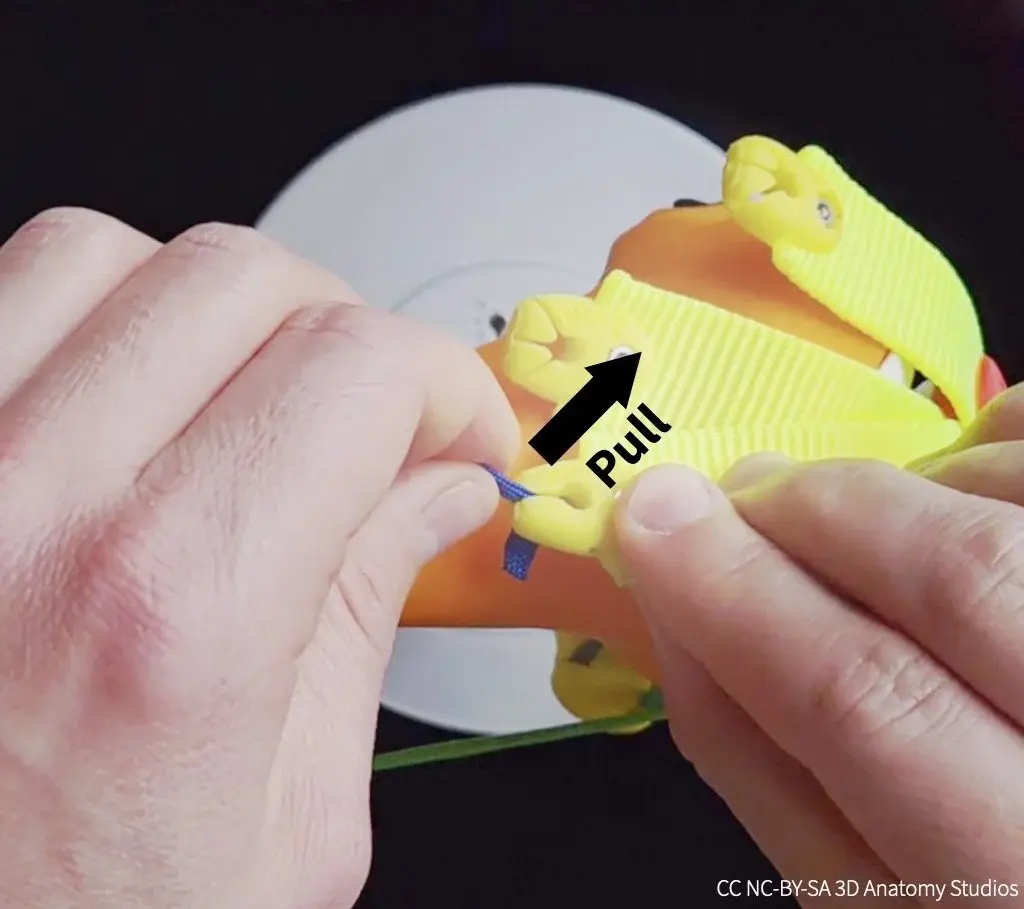
To detach the semimembranosus from its bony attachment to the tibia, pull the tail of the cord so that the knot unlocks from the internal hook and slides out of the hole. If the tail is inside the hole or if you have trouble, you can use the forceps to grab the cord inside the hole to pull it out.